


Key takeaways:
- Snack giants such as PepsiCo, Mondelez and Mars are expanding beyond supermarket shelves by turning blockbuster brands like Lay’s, Oreo and M&M’s into restaurants, cafés and experiential retail destinations.
- These concepts give manufacturers greater control over how consumers experience their brands while generating marketing buzz, consumer insights and potential new revenue streams.
- From permanent attractions like M&M’s World and Hershey’s Chocolate World to pop-up experiences such as Cheez-It’s themed hotel rooms, hospitality is emerging as a new frontier for snack brand expansion.
PepsiCo has taken an unusual step for a company best known for selling packaged snacks. Earlier this year, the CPG giant launched Pilla Tortilla, a Lay’s-branded dining concept in Madrid developed with Michelin-starred chef Miguel Carretero. The menu centres on Spain’s classic tortilla, made using Lay’s potato chips instead of sliced potatoes.
While the idea may appear playful, it reflects a broader shift taking place across the snacks and confectionery industries. Major names are increasingly experimenting with ways to translate well-known packaged brands into physical experiences, from cafés and dessert bars to flagship retail attractions and visitor centres.
Over the past decade, brands such as Oreo, M&M’s, KitKat and Nutella have appeared in hospitality concepts designed to deepen consumer engagement and strengthen brand visibility.
For manufacturers navigating crowded supermarket shelves and rapidly changing consumer habits, these concepts offer a new route to growth – one that combines marketing, retail and hospitality in a single platform.
Lay’s tests foodservice waters
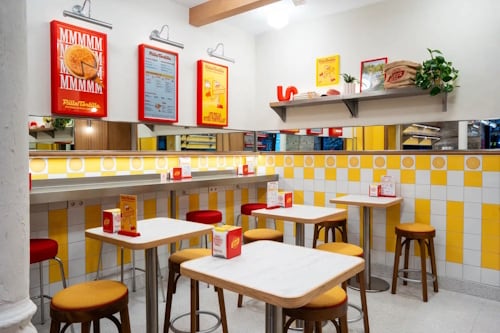
The Madrid restaurant was developed by PepsiCo Food Ventures, a unit created to explore new food concepts built around the company’s brands.
“Pilla Tortilla is the first restaurant project by PepsiCo and Lay’s anywhere in the world,” said Pol Codina, GM and senior VP at PepsiCo Food Ventures. “With this opening in Madrid, PepsiCo is expanding its food and culinary focus and delivering on our diversification and growth strategy in the away-from-home channel.”
The menu centres on tortilla recipes where Lay’s chips replace the traditional sliced potatoes. Other dishes reinterpret familiar Spanish comfort foods while keeping the snack brand visible throughout the menu.
PepsiCo frames the project as a way to explore how its products might appear in settings far removed from the snack aisle.
“We wanted to go beyond the typical snack moment and turn something as familiar as eating tortilla into a unique concept,” said Erica Lascorz, senior director of Innovation Marketing for Europe at PepsiCo. “This project shows our commitment to elevating one of our most iconic brands with proposals that connect with consumers and strengthen brand recognition.”
Chef Miguel Carretero said the collaboration worked in part because Lay’s already holds a familiar place in everyday food culture.
“Lay’s is part of the collective imagination of many generations,” he said. “Bringing its identity into such an emblematic recipe as tortilla was an exciting challenge.”
The concept also provides a useful testing ground for PepsiCo, offering a way to observe how consumers respond to the brand in a foodservice environment.
Oreo cafés and confectionery destinations
PepsiCo is entering territory that confectionery companies have been exploring for years.
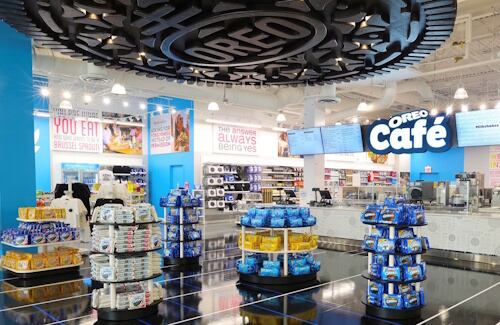
In 2021, Mondelez International opened the Oreo Café at the American Dream entertainment complex in New Jersey, combining a dessert bar with retail shelves selling Oreo merchandise and customisable desserts built around the cookie brand.
“Oreo Café gives fans a new, immersive and personalised way to experience Oreo in person,” said Michelle Deignan, VP of Oreo US, when the venue opened.
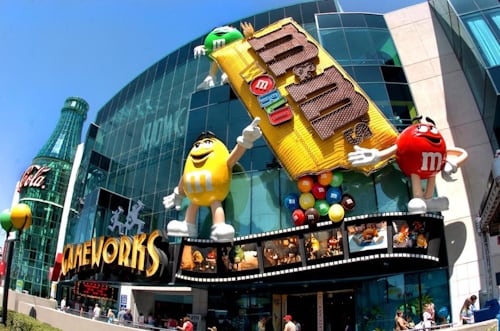
For some brands, the concept has evolved far beyond a café. Mars, for example, opened its first M&M’s World flagship on the Las Vegas Strip in 1997 and has since expanded the experiential retail concept to cities including New York, London, Shanghai and Berlin. The company now operates seven locations worldwide, where visitors can personalise candy, browse branded merchandise and interact with themed displays built around the brand’s colourful characters.

The idea stretches back even further at The Hershey Company, which has operated Hershey’s Chocolate World since the 1970s. The flagship visitor centre sits next to the company’s headquarters in Hershey, Pennsylvania, and the concept has expanded to additional locations including Niagara Falls, Chicago, Las Vegas and Singapore. These sites combine chocolate tastings, retail stores, restaurants and themed attractions built around Hershey’s confectionery portfolio.
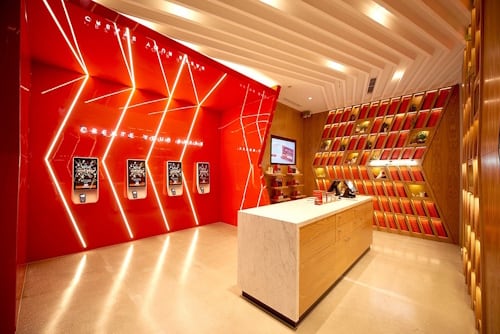
Other global brands have experimented with hospitality concepts as well. Nestlé, for example, operates KitKat Chocolatory boutiques in markets such as Japan, where consumers can design customised KitKat bars and sample limited-edition flavours created by pastry chefs. Ferrero has explored a similar idea through Nutella cafés, serving pastries, drinks and desserts centred on the hazelnut spread.
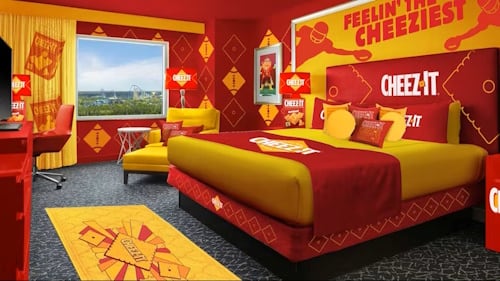
Some brands have pushed the idea even further through pop-up activations. Kellanova’s Cheez-It, for example, created themed hotel rooms for players and fans during the 2022 Cheez-It Bowl and the 2023 Cheez-It Citrus Bowl, with décor designed to resemble the inside of the brand’s iconic orange box. The concept has since evolved into other immersive experiences, including The Cheez-It Escape, a limited-time themed getaway launched in Prince Edward County, Canada, in March 2025. Similar pop-up hospitality concepts have appeared elsewhere in the food sector, including Nutella’s Hotella Nutella fan experience in Napa Valley in 2019 and Taco Bell’s limited-time branded hotel in Palm Springs the same year – signalling how immersive brand environments are becoming an increasingly popular brand-building tool.
Countless other brands are experimenting with similar ideas, too many to mention here. But taken together, these concepts show how some of the world’s best-known confectionery brands have evolved beyond packaged products into consumer destinations spanning retail, hospitality and tourism.
Why food brands want real-world experiences

The commercial logic behind these ventures is relatively straightforward. Restaurants and flagship retail spaces place brands in environments where consumers interact with them directly rather than encountering them only on a supermarket shelf. That visibility matters, but so does the insight it generates. Hospitality settings give manufacturers an opportunity to observe how customers respond to flavours, formats and customisation in real time – something that is difficult to capture through traditional retail data alone.
Experiential venues also create a form of marketing visibility that conventional advertising struggles to replicate. A restaurant or branded café becomes a destination in its own right, attracting visitors, generating social media content and reinforcing brand identity through physical interaction. For companies whose products are already widely recognised, that type of exposure can deepen loyalty while keeping brands culturally relevant in an increasingly crowded snack market.
Foodservice environments broaden the ways products can be used. A potato chip can become part of a restaurant dish; a cookie can form the foundation of a dessert menu; and chocolate can anchor tasting flights or immersive retail concepts. These settings effectively transform packaged ingredients into culinary components, opening up new consumption occasions that extend beyond traditional snacking.
There is also a strategic advantage in controlling the environment in which consumers encounter a brand. In retail, manufacturers rely heavily on supermarkets to present and sell their products. Branded cafés, restaurants and retail attractions allow companies to shape the experience themselves – from menu development and product presentation to merchandising and storytelling. That direct relationship with consumers can generate insights, loyalty and brand equity that are difficult to build through packaged goods alone.
In that sense, hospitality serves not just as a marketing platform but as a practical innovation lab. Companies can test menu ideas, gauge reactions to new flavour combinations and experiment with formats before committing to large-scale retail launches. For manufacturers managing global brands, the ability to trial concepts in a controlled environment offers insights that supermarket sales figures alone rarely provide.
A different kind of brand expansion

For snack producers, the appeal of these initiatives lies partly in the strength of their brands. Products such as Lay’s, Oreo, M&M’s, KitKat and Nutella are recognised across markets and generations, which makes them well suited to formats that rely on immediate familiarity.
Restaurants, cafés and retail destinations also offer practical advantages. They can generate additional revenue streams through foodservice and merchandise while providing controlled spaces where companies can test new ideas and engage consumers in ways that traditional retail rarely allows.
PepsiCo’s Lay’s restaurant in Madrid captures that ambition in a single location. A snack traditionally eaten straight from the bag has become the centrepiece of a restaurant concept designed to showcase the brand in a completely different setting.
The concept may remain a niche experiment, but it signals a broader shift in how major food companies view their brands: not simply as products sold in stores, but as platforms extending into hospitality and consumer experiences. For brands as recognisable as Lay’s, Oreo and M&M’s, the restaurant floor may soon be as important as the supermarket aisle.

